A Vocation Older Than Its Titles
Before titles, sovereignty, and military power, there was a simple vocation: to care for the sick and serve those in need.
From Hospitality to a Sacred Mission
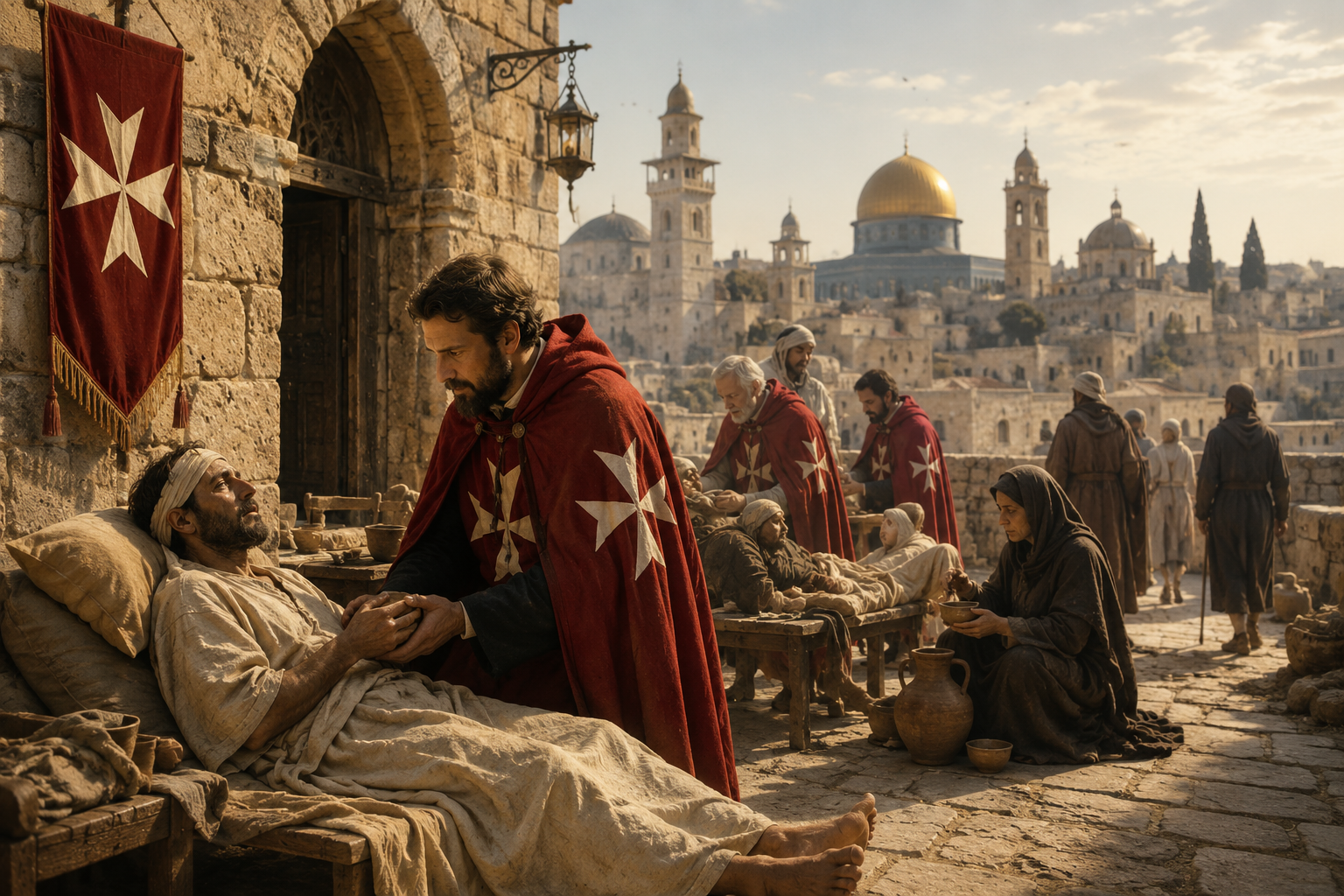
The history of the Knights of Malta begins in 11th-century Jerusalem, where a hospital was established to care for sick, poor, and injured pilgrims traveling to the Holy Land.
What began as a mission of compassion soon developed into a religious order dedicated to faith, service, and the protection of those in need. These early Hospitallers laid the foundation for a tradition that would endure for centuries.
Their commitment to caring for the sick remains one of the defining principles of the Order and continues to shape its humanitarian mission today.
1113 — The Order of
St. John Is Formally Recognized
What began as a hospital in Jerusalem became an independent religious order dedicated to faith, service, and care for the poor and sick.
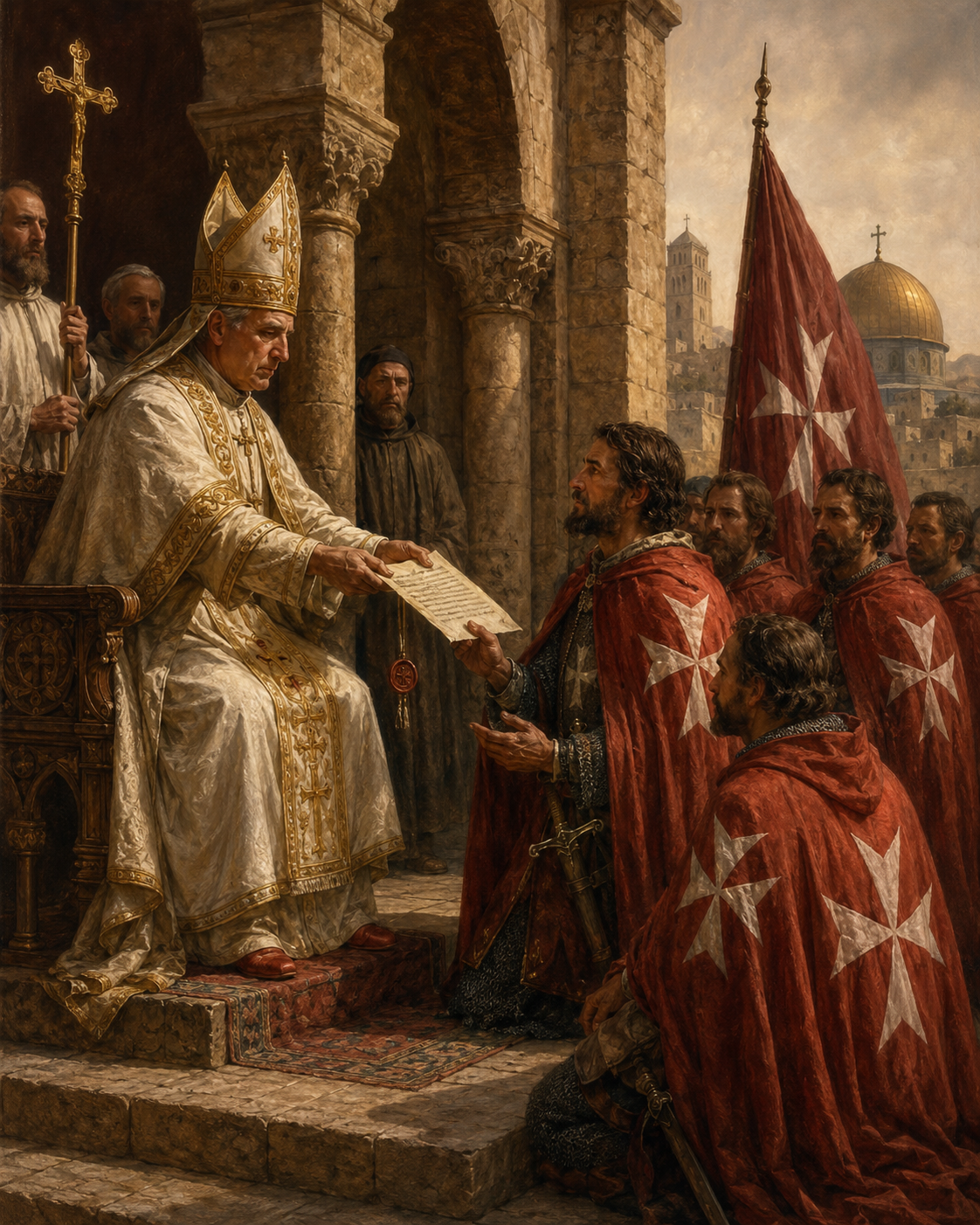
On February 15, 1113, Pope Paschal II issued the papal bull Pie Postulatio Voluntatis, formally recognizing the Hospitallers of St. John of Jerusalem under the leadership of Blessed Gerard.
The decree placed the Order under the protection of the Church and granted it the right to freely elect its own leaders without interference from secular or religious authorities. This recognition established the foundation for the Order’s independence and its development across Europe and the Holy Land
The papal bull was a defining moment in the history of the Hospitallers. It confirmed their right to maintain their institutions, receive donations, and continue their charitable work throughout the Christian world. Most importantly, it strengthened the Order’s ability to carry out its mission independently while remaining devoted to the service of the Church.
From Jerusalem, the Order would grow into an international brotherhood with hospitals, estates, and communities extending across Europe and the Mediterranean. Its members remained bound by a commitment to Christian faith, service to the poor, and care for the sick.
The recognition granted in 1113 therefore represents far more than an administrative milestone. It established the foundation upon which the Order would develop for centuries, preserving the Hospitaller tradition while preparing it for the extraordinary challenges that lay ahead.
From Hospitallers to Knights
As conflict intensified in the Holy Land, the Order’s mission expanded from caring for pilgrims to defending them and protecting Christian communities.
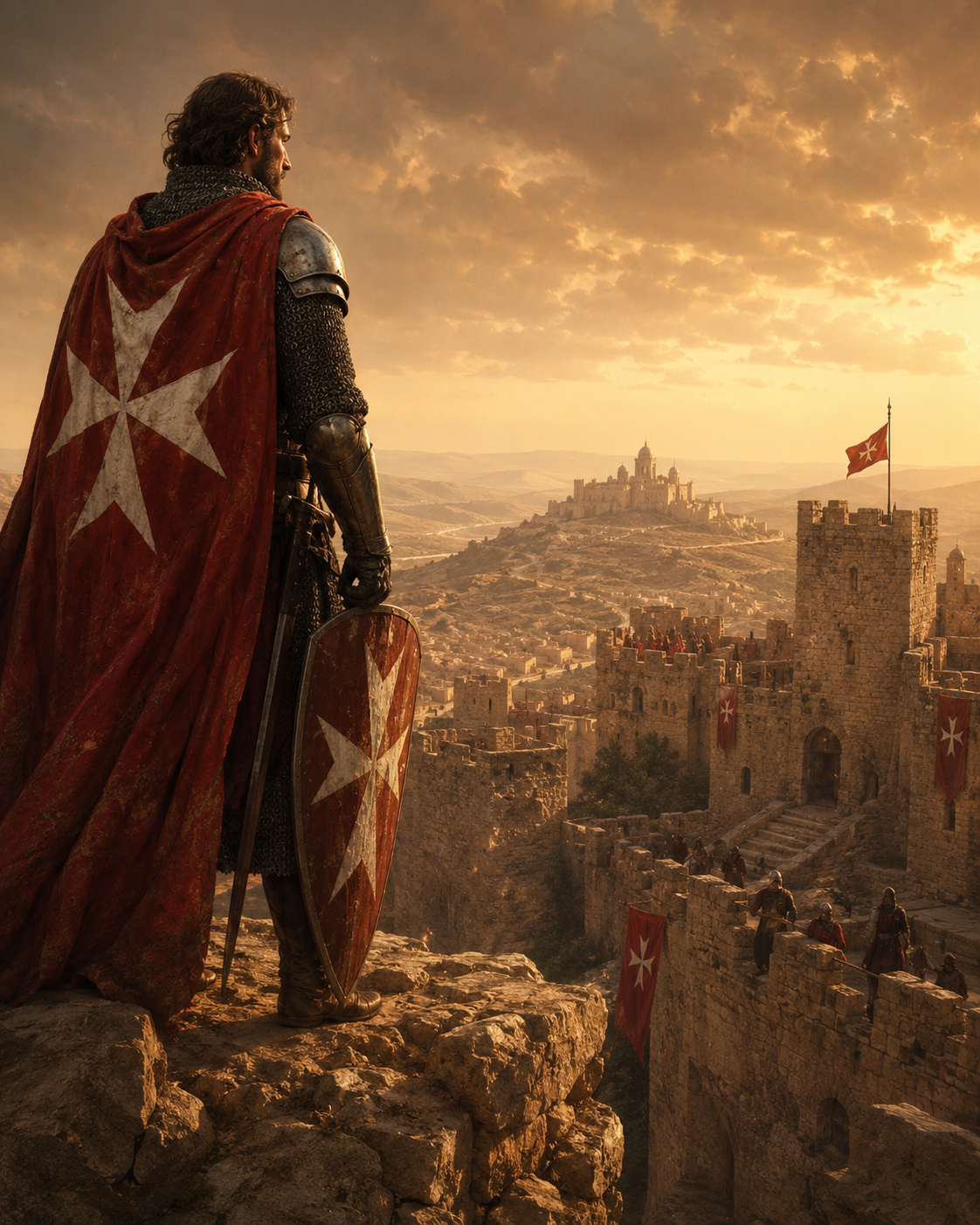
During the 12th century, the Hospitallers gradually assumed a military role alongside their original charitable mission. Members of the Order continued to operate hospitals and care for the sick, while trained knights took responsibility for defending pilgrims, fortifications, and important routes throughout the Crusader states.
This transformation gave rise to the military brotherhood that would become known throughout history as the Knights Hospitaller. Bound by religious vows and disciplined service, its members combined the duties of a monastic order with the responsibilities of an organized fighting force.
The Order constructed and maintained formidable castles and strongholds across the Holy Land. These fortifications protected vulnerable territories and became important centers of defense during the Crusades.
Despite its growing military responsibilities, the Order never abandoned its original Hospitaller mission. Faith, charity, service, and protection remained inseparable parts of its identity.
1187 — Jerusalem Falls
The loss of Jerusalem forced the Order to adapt, relocate, and continue its mission under dramatically changed circumstances.
In 1187, Jerusalem fell to the forces of Saladin following the Battle of Hattin. The loss of the Holy City marked a profound turning point for the Hospitallers and the other Christian military orders operating in the region.
Although driven from Jerusalem, the Order did not disappear. Its members continued to care for the sick, support pilgrims, and defend Christian strongholds wherever they could maintain a presence.
The Hospitallers eventually established themselves at Acre, which became one of the principal centers of Christian power in the Holy Land. From there, the Order rebuilt its institutions, maintained hospitals, and continued its military and charitable responsibilities.
The period demonstrated one of the Order’s defining characteristics: its ability to survive upheaval without abandoning its mission. Even after losing the city in which its story began, the Hospitallers continued forward.
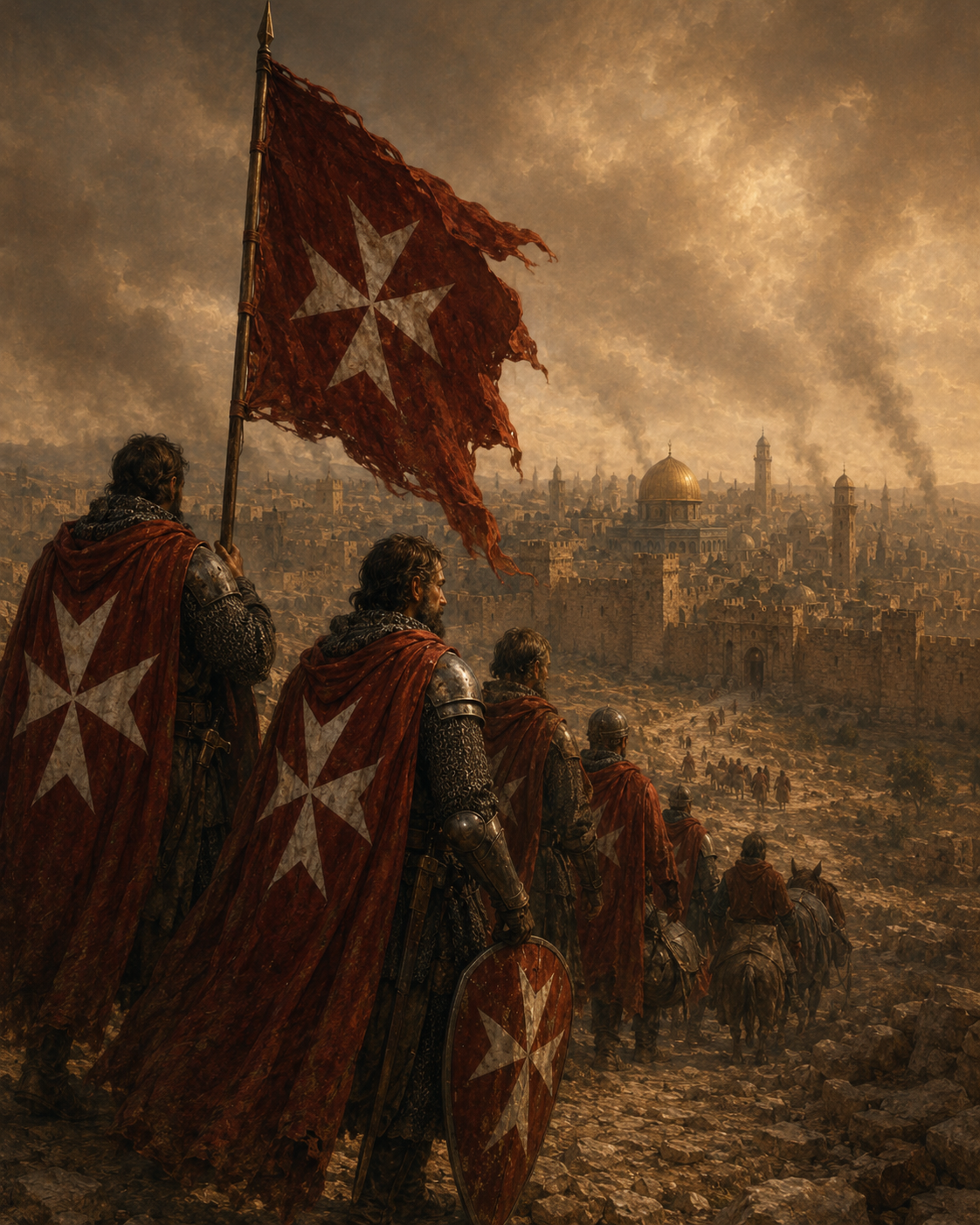
1291 — The Fall of Acre
The loss of Acre ended the Order’s presence in the Holy Land and forced the Hospitallers to begin a new chapter beyond Jerusalem.
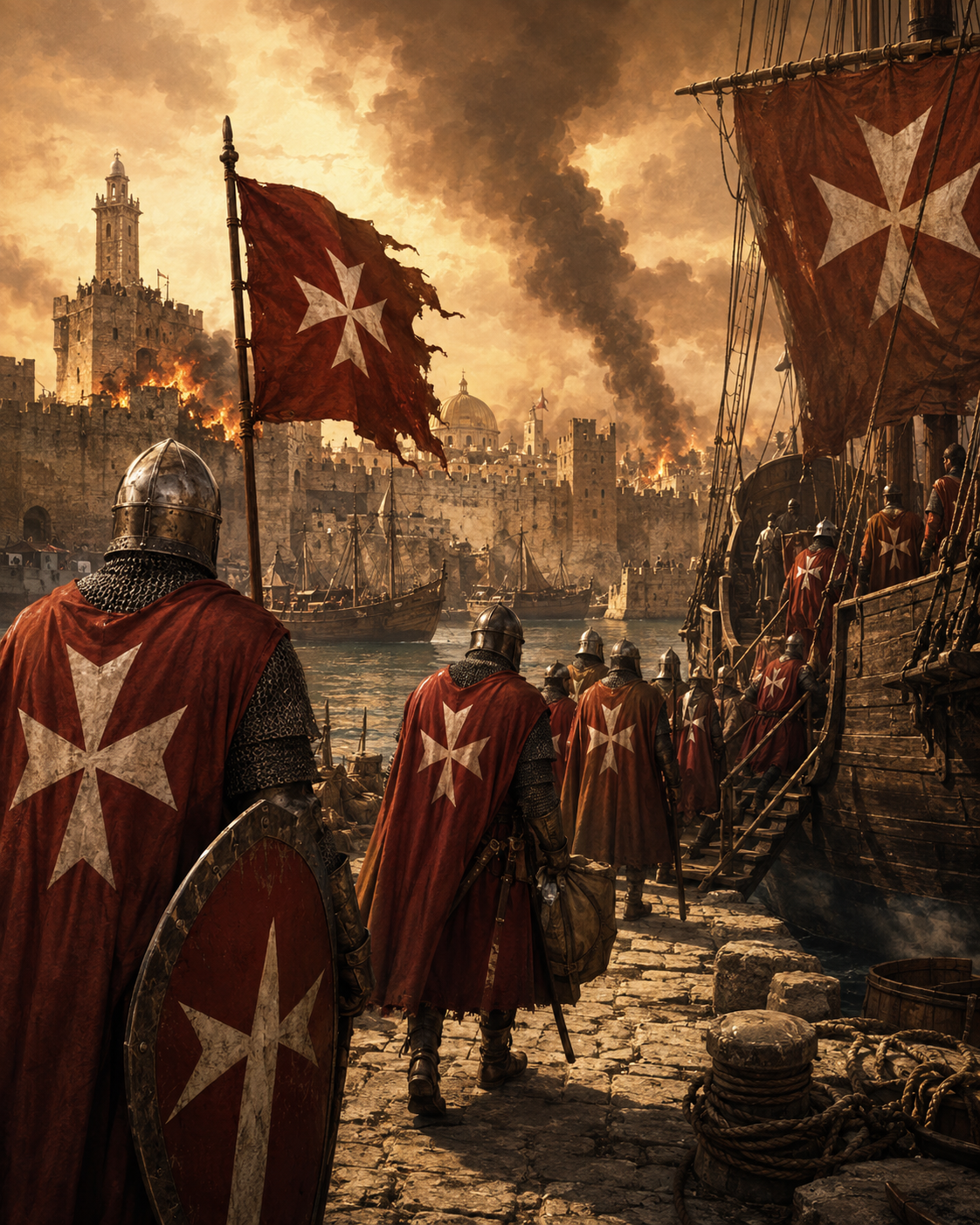
In 1291, the city of Acre fell after a fierce siege, bringing an end to the principal remaining Christian stronghold in the Holy Land. For the Hospitallers, the defeat marked the close of nearly two centuries of service, defense, and sacrifice in the region where their mission had begun.
Surviving members of the Order withdrew from Acre and eventually established themselves on Cyprus, where they reorganized and prepared for a new role in the eastern Mediterranean.
Although the Order had lost its territorial base in the Holy Land, its mission endured. Its members continued to combine religious devotion, charitable service, and military responsibility while adapting to a changing political and strategic world.
The fall of Acre was not the end of the Order. It became the beginning of its transformation into a maritime power—one that would soon establish a new stronghold on the island of Rhodes.
1309 — The Knights
Establish Themselves on Rhodes
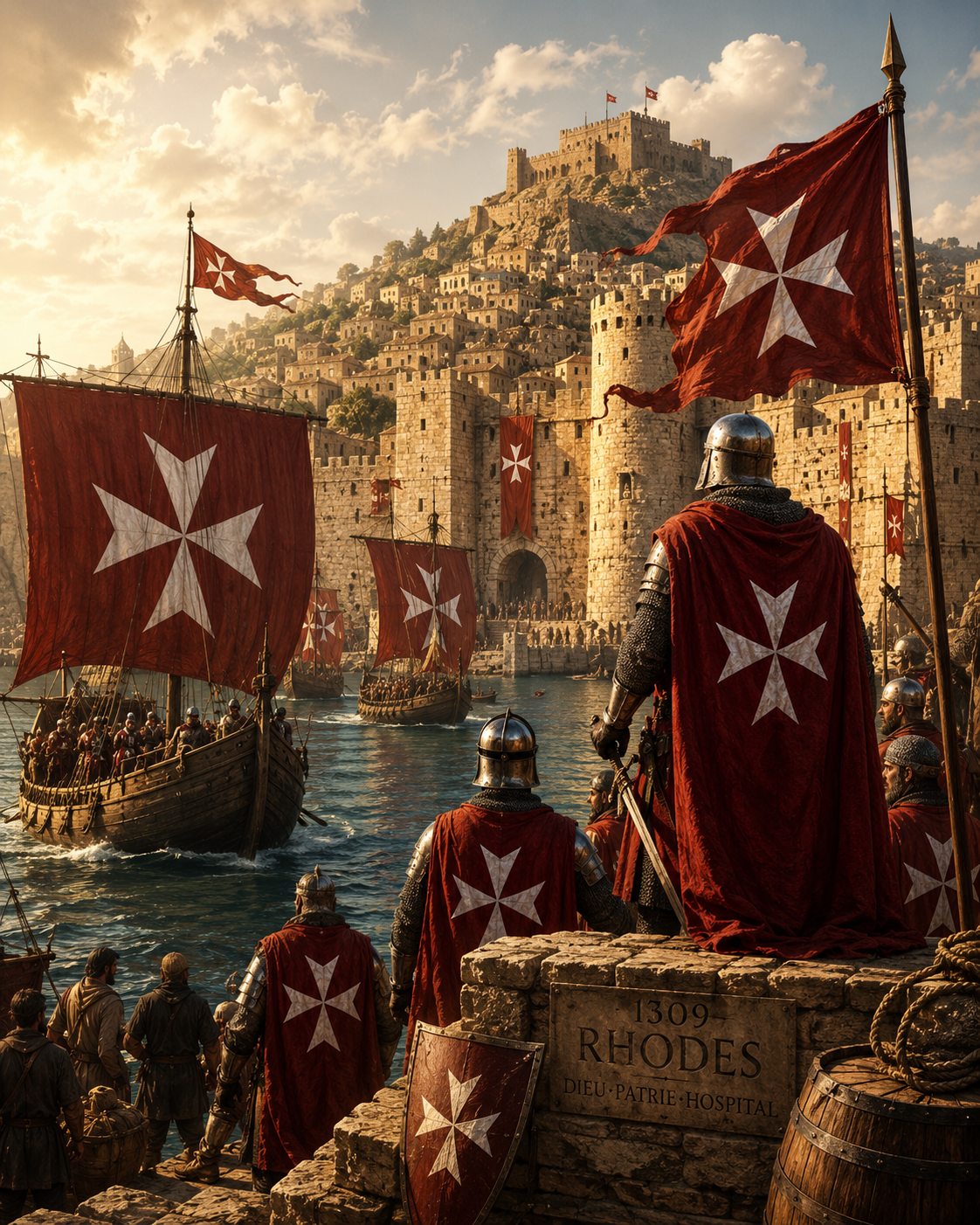
After the loss of the Holy Land, the Order rebuilt its strength on Rhodes and emerged as a major maritime power in the eastern Mediterranean.
Following a period on Cyprus, the Hospitallers captured and established control of Rhodes in the early 14th century. The island gave the Order a secure territorial base from which it could continue its religious, charitable, and military mission.
Rhodes soon became the center of the Order’s government and naval operations. The Knights fortified the island, constructed hospitals, strengthened its harbor, and developed a powerful fleet capable of defending Christian shipping and confronting hostile forces across the Mediterranean.
The Order’s presence on Rhodes marked a significant transformation. No longer centered primarily on the Holy Land, the Hospitallers became an increasingly important maritime and defensive power.
For more than two centuries, Rhodes served as one of the Order’s greatest strongholds and prepared the way for the next defining chapter of its history: Malta.
1530 — The Order
Comes to Malta
After leaving Rhodes, the Order received Malta and began the chapter that would permanently define its name and identity.
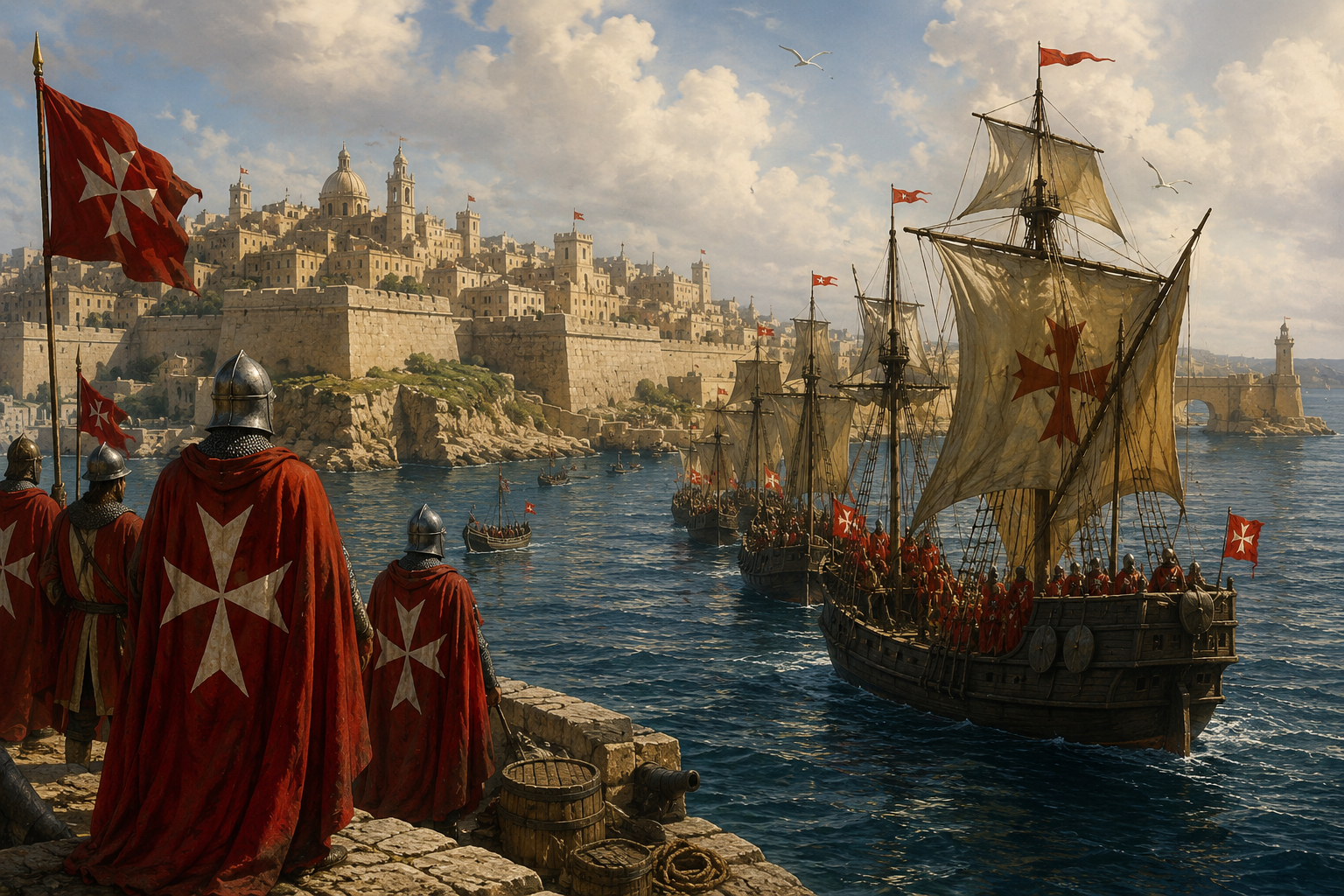
In 1530, Emperor Charles V granted the islands of Malta and Gozo, along with Tripoli in North Africa, to the Order. The Knights established their headquarters on Malta and began strengthening the island’s defenses.
From this new base, the Order rebuilt its fleet, expanded its fortifications, and continued its mission of defending Christian shipping and providing care to the sick and wounded.
Malta’s strategic position at the center of the Mediterranean made it an ideal stronghold. Over time, the island became inseparable from the identity of the Order, giving rise to the name by which it would become known throughout the world: the Knights of Malta.
The Order’s arrival in Malta set the stage for one of the most important events in its history—the Great Siege of 1565.
1565 — Malta Stands
Against the Ottoman Empire
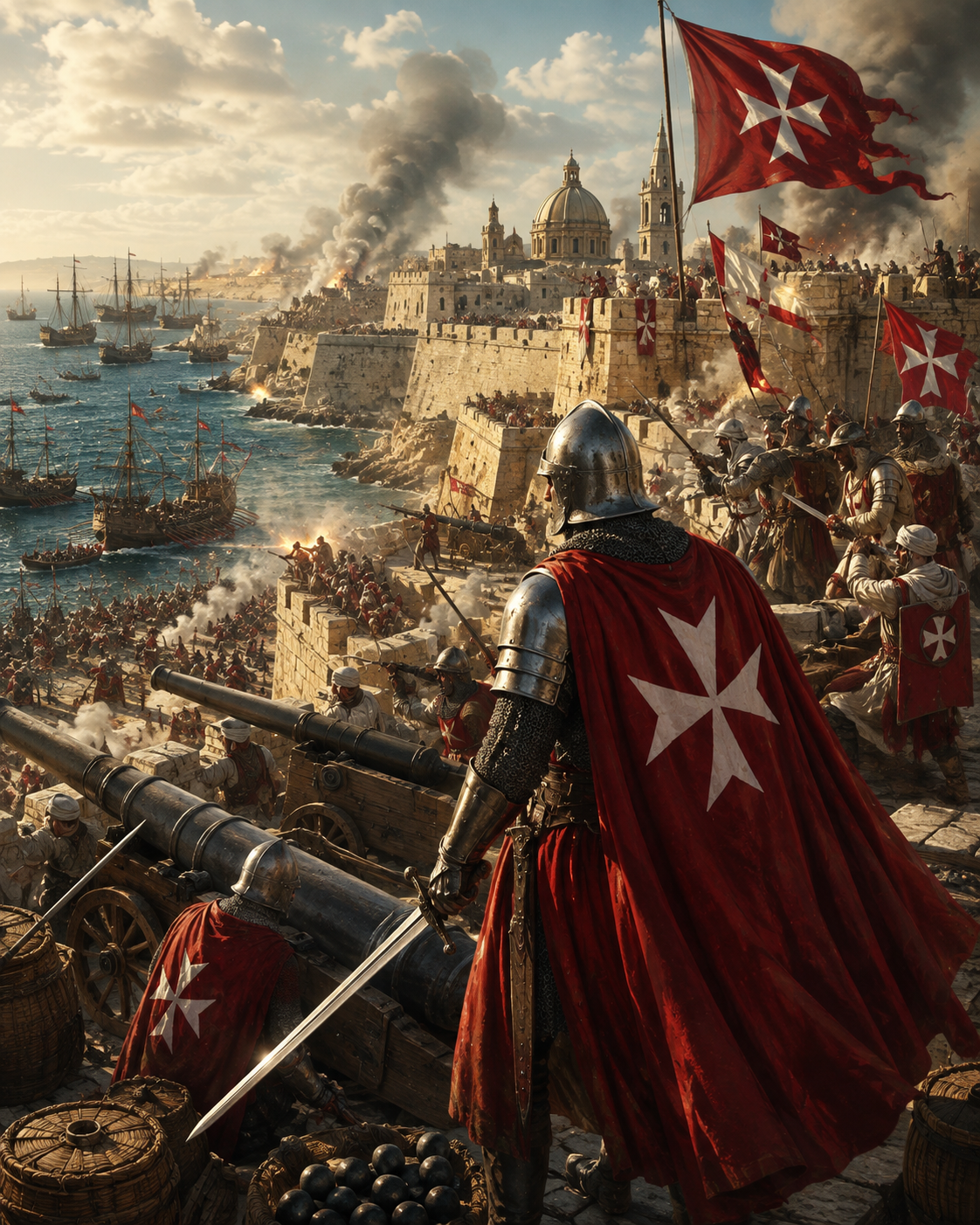
The Great Siege of 1565 became one of the defining moments in the history of the Order and secured Malta’s place in European memory.
In 1565, a massive Ottoman force attacked Malta in an effort to break the Order’s power in the Mediterranean. The Knights, supported by Maltese defenders and allied forces, faced overwhelming pressure throughout a brutal months-long siege.
Under the leadership of Grand Master Jean Parisot de Valette, the defenders held key fortifications and resisted repeated assaults despite heavy losses.
The struggle became a symbol of endurance, discipline, and sacrifice. When the Ottoman forces finally withdrew, the victory transformed the reputation of the Order and strengthened its position in the Mediterranean.
In the aftermath of the siege, the Order began construction of a new fortified city named Valletta in honor of Grand Master de Valette.
The Great Siege remains one of the most celebrated chapters in the history of the Knights of Malta.
1566 — The Founding of Valletta
Victory in the Great Siege was followed by an ambitious new chapter: the construction of a fortified capital that would become one of the Order’s greatest legacies.
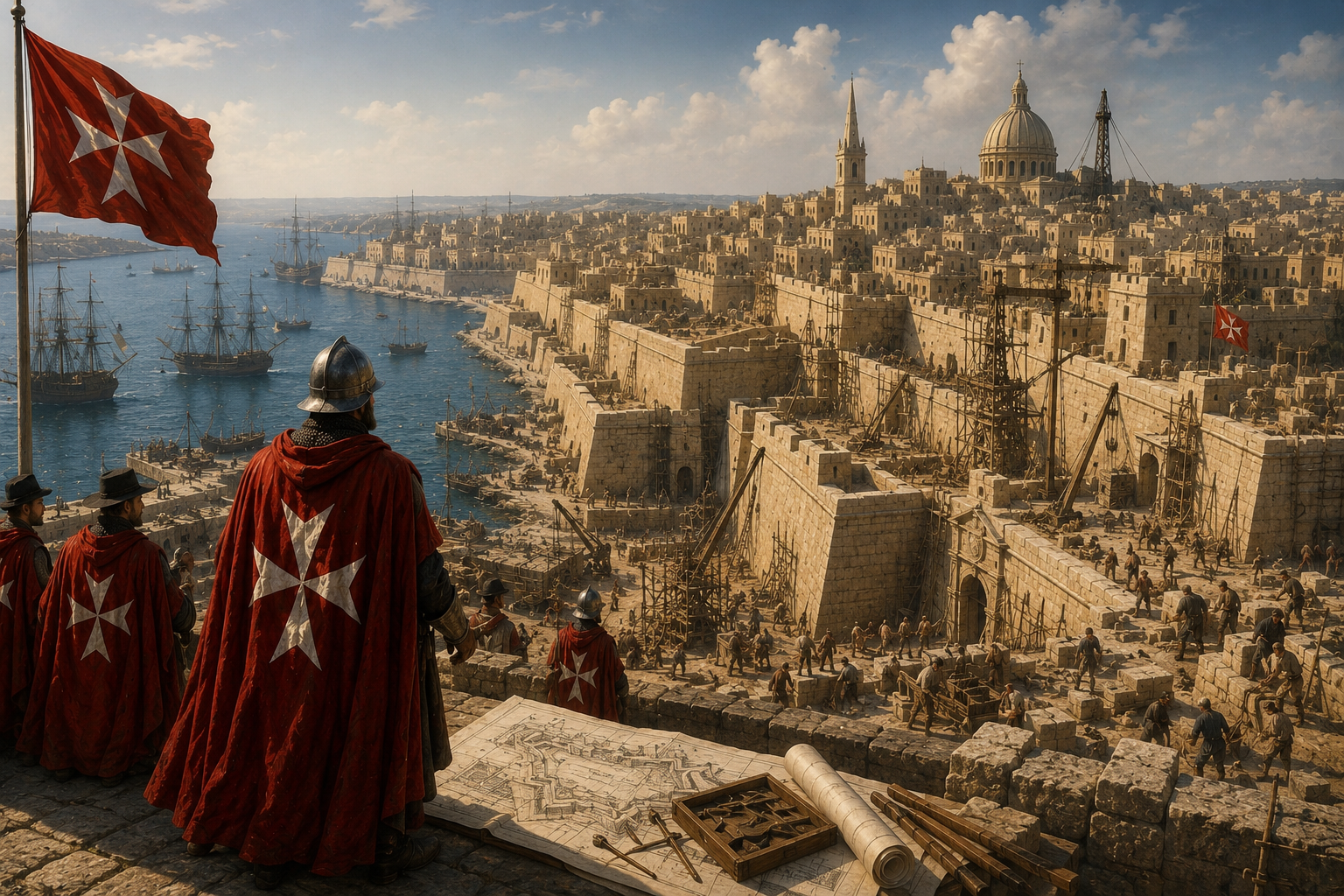
In 1566, work began on a new fortified city named Valletta in honor of Grand Master Jean Parisot de Valette.
Designed to strengthen Malta’s defenses and provide a permanent center for the Order, Valletta quickly became a symbol of resilience, faith, and military engineering.
The Knights constructed massive fortifications, churches, residences, hospitals, and administrative buildings throughout the city. Valletta became not only a defensive stronghold but also a center of culture, medicine, and government.
From Malta, the Order continued to operate across the Mediterranean, maintaining its naval presence while expanding its charitable and medical work.
The creation of Valletta marked the beginning of a new era in which the Order’s influence extended far beyond the battlefield.
1798 — The Order
Is Forced from Malta
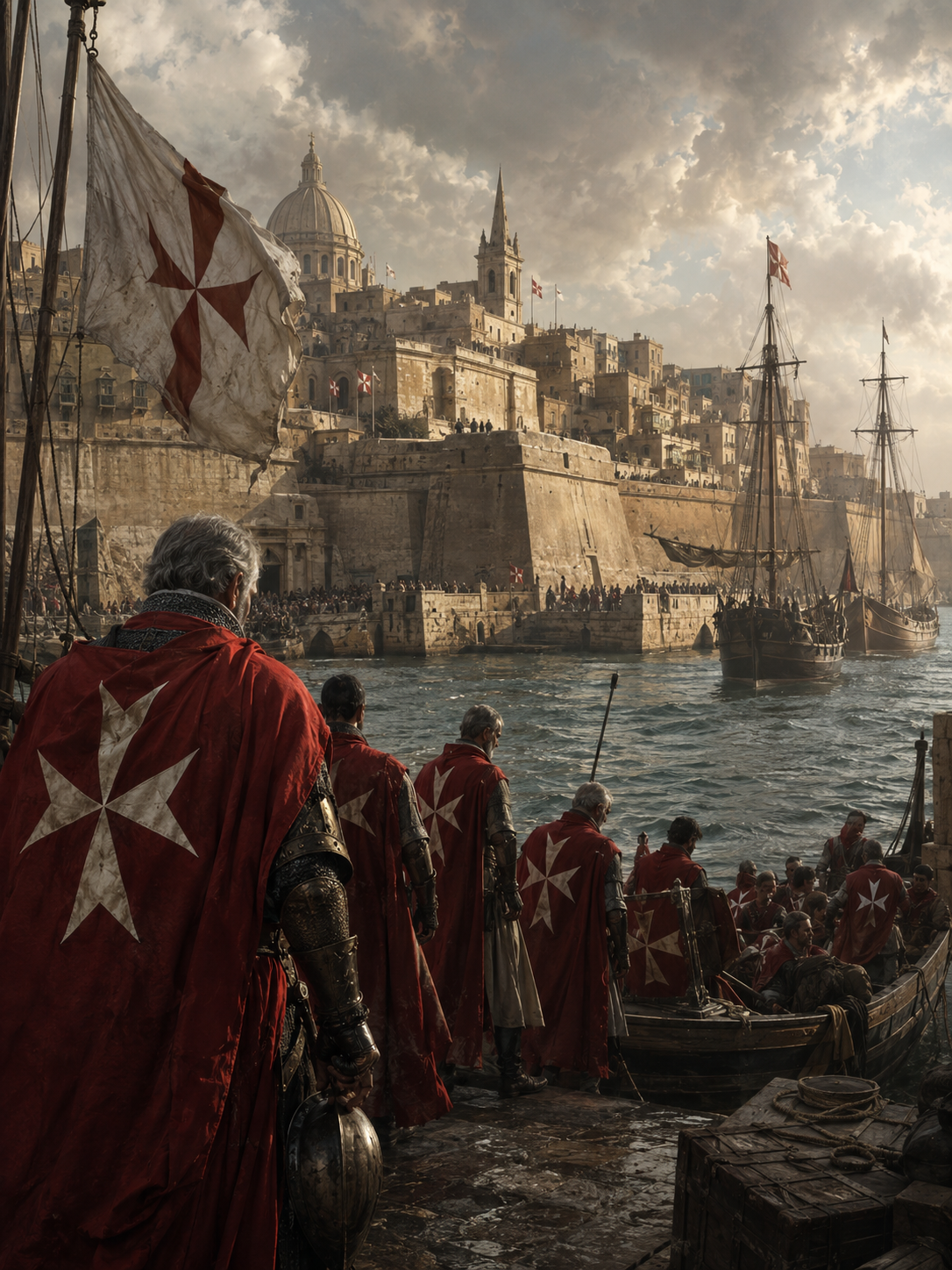
After more than two and a half centuries on the island, the Order’s rule in Malta came to an abrupt end during the rise of Napoleonic France.
In 1798, Napoleon Bonaparte arrived at Malta during his expedition to Egypt. Faced with overwhelming French military power and internal restrictions that limited resistance against fellow Christians, the Order was unable to mount an effective defense.
The French occupation ended the Order’s political control of Malta and forced its leadership and many of its members into exile.
The loss of Malta marked one of the most difficult periods in the Order’s history. Without a territorial homeland, it was compelled once again to redefine its role and preserve its identity under dramatically changed circumstances.
Despite the loss, the Order survived. Its religious and charitable traditions continued, laying the groundwork for the modern humanitarian mission that would follow.
From Military Order
to Humanitarian Service
Though the Order lost Malta, its mission endured—shifting from territorial defense toward humanitarian, medical, and charitable service.
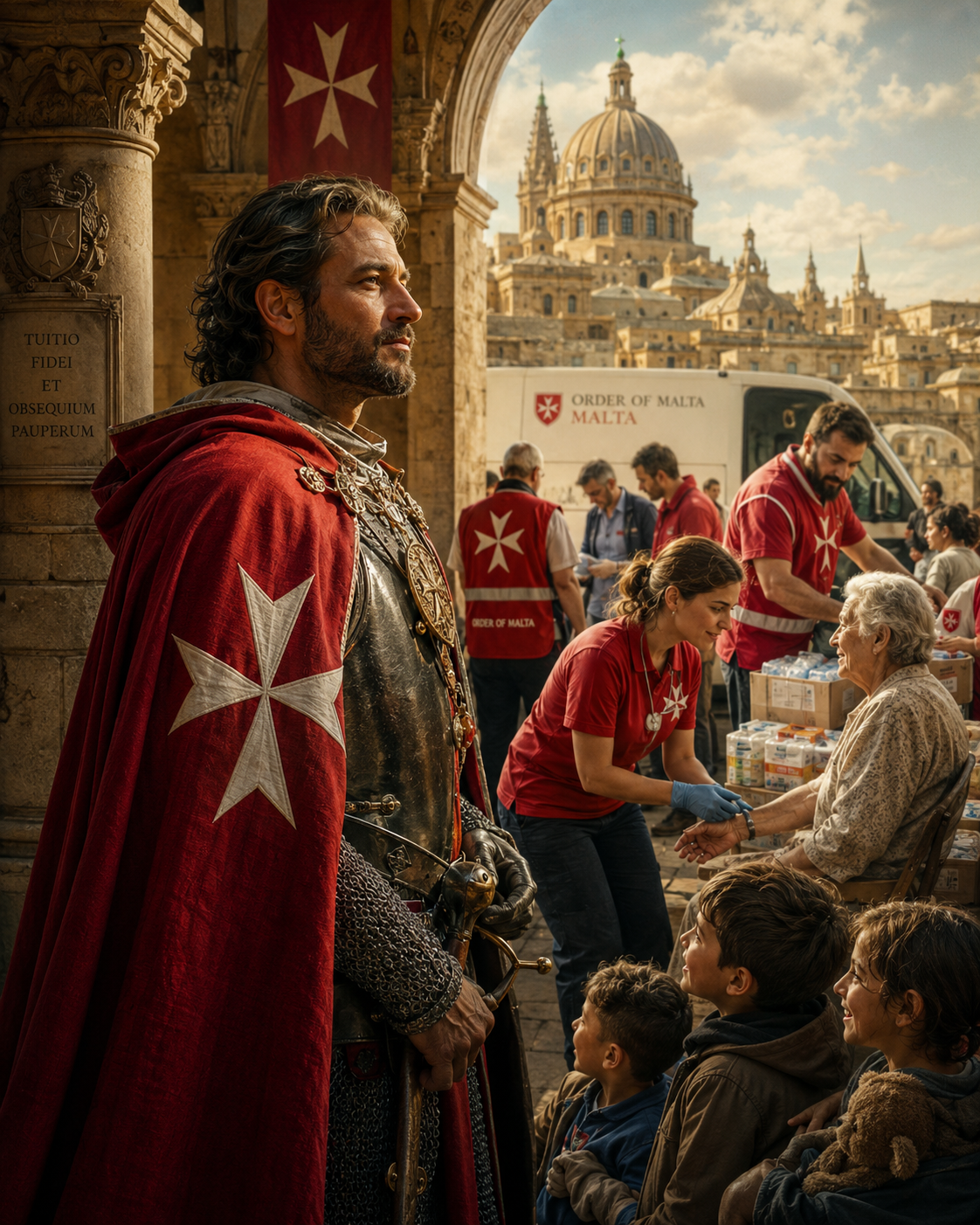
After the loss of Malta, the Order entered a period of transition. Without a permanent territorial base, its focus gradually moved away from military power and toward the charitable mission that had defined its earliest years in Jerusalem.
Across Europe and beyond, members of the Order continued to support hospitals, medical care, disaster relief, and assistance to the poor and vulnerable.
The principles established centuries earlier—faith, service, charity, and care for the sick—remained at the heart of the Order’s identity.
Today, the legacy of the Knights of Malta is reflected not only in its historic fortresses and battles, but in a continuing tradition of service rooted in the same humanitarian ideals that inspired its founding.
1797–1817 — The Catastrophe
and the Russian Passage
In June 1798 Napoleon Bonaparte took Malta almost without a shot, and the Order faced extinction.
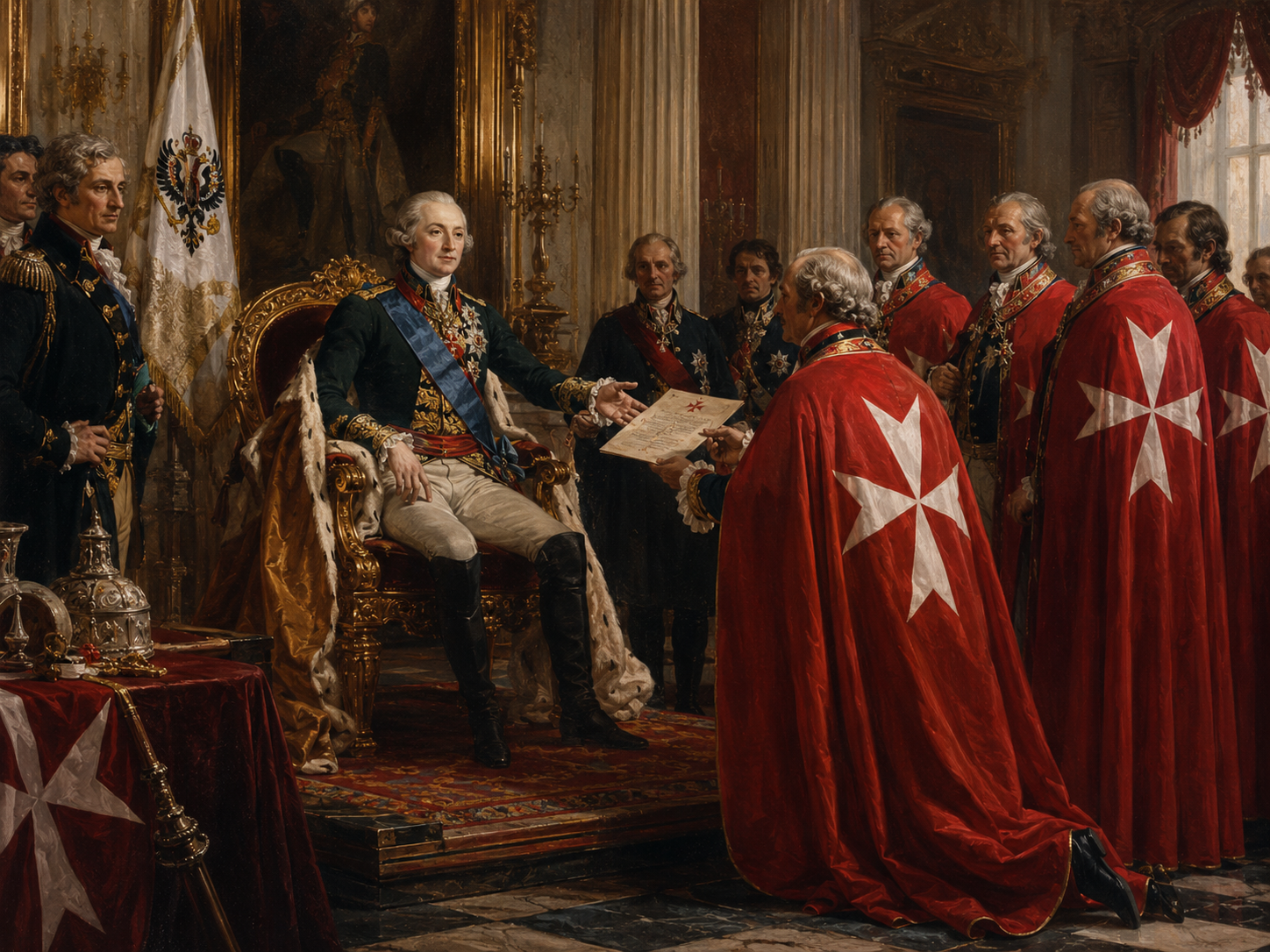
What saved its vocation was a friendship already sealed: by the Convention of 1797, Grand Master Emmanuel de Rohan and Emperor Paul I of Russia had established a Russian Grand Priory, and when the homeless knights sought a protector, they found more than protection. In October 1798 the knights gathered in Saint Petersburg elected Paul Grand Master; he was solemnly invested on 29 November 1798, and upon Hompesch’s abdication stood as the Order’s acknowledged head, recognised in practice by courts across Europe.
Paul’s brief mastership left two permanent gifts. First, magnitude: he erected a Russian Grand Priory of well over a hundred commanderies, for a time the financial mainstay of the whole Order. Second — and for this Federation, decisively — breadth: Paul opened the Order’s embrace beyond the Roman Catholic communion, creating by his statute of 1799 the Hereditary Family Commanderies, open to Orthodox nobility, their dignity transmissible in blood.
After Paul’s death in 1801, the Roman line passed under lieutenants toward its own restoration, and the Russian institutions were wound down by imperial decree by 1817. But institutions and vocations are different things. The offices closed; the families remained.
1817–1908 — The
Century of Quiet Stewardship
For the better part of a century the tradition Paul had planted lived not in palaces but in households.
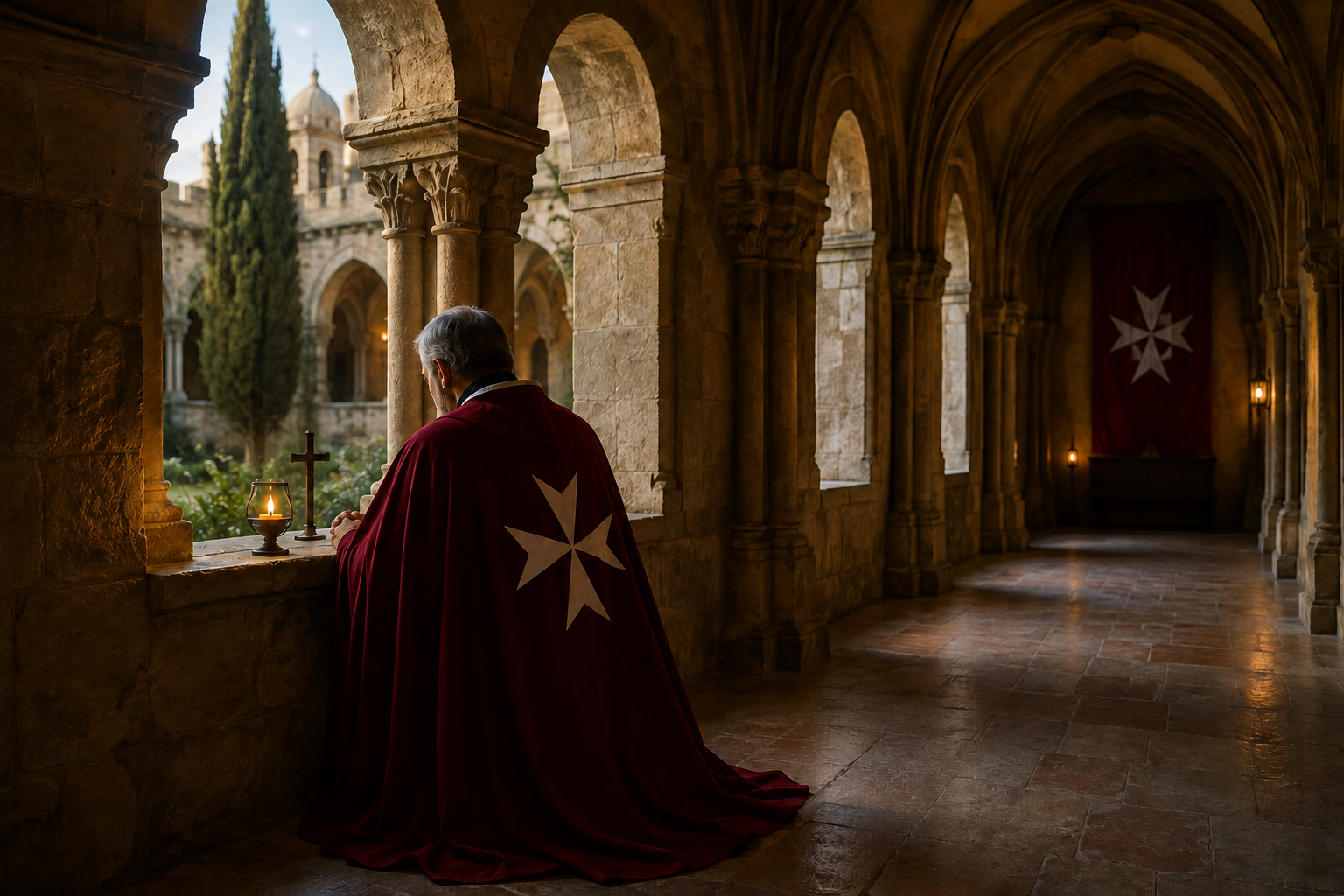
The hereditary commander families preserved the memory, the insignia, and the obligation. The Russian Court Almanacs continued for decades to record the Order’s presence; Sir Bernard Burke noticed it in his survey of the world’s knighthoods in 1858; in 1867 Emperor Alexander II confirmed Prince Alexander Troubetskoy as a Hereditary Family Commander; in 1912 the Imperial Chancery recorded permission for Count Vladimir Armfeld to wear the order and transmit it to his son; and as late as 1916, on the eve of the Revolution, Emperor Nicholas II appointed Hereditary Commanders.
A flame carried in families rather than institutions is a quieter flame — but it is harder to extinguish. When revolution scattered the Russian nobility across the world in 1917, the tradition travelled in their luggage, and thirteen surviving Hereditary Commanders would gather in Paris in 1928 to reconstitute their union in exile.
Modern Renewal
Ancient principles, renewed purpose, and a continued commitment to faith, charity, and service in the modern world.
As Europe entered the modern era, the Order carried forward a heritage shaped by centuries of faith, sacrifice, and service. Though the political and military world that had defined earlier generations was changing, the principles at the heart of the Order remained constant.
Renewal meant preserving the traditions of Christian knighthood while answering the needs of a new age. Service increasingly found expression through charitable works, humanitarian assistance, the defense of Christian values, and support for those facing hardship.
Rather than allowing history to become merely a memory, successive generations worked to preserve the Order’s spiritual identity, customs, and commitment to service. The Maltese Cross remained not simply an emblem of the past, but a visible reminder of the responsibilities carried by those who serve beneath it.
Today, that heritage continues through men and women committed to faith, honor, charity, and service—carrying an ancient tradition forward with purpose in the modern world.
The Legacy Continues
Across centuries of triumph, hardship, exile, and renewal, the mission has endured.
The history of the Order is more than a record of battles, territories, and political change. It is the story of a commitment that has survived across generations: to defend the Christian faith, serve those in need, and uphold the principles of honor, charity, and brotherhood.
From its origins in Jerusalem through Rhodes, Malta, exile, and renewal, each generation inherited both the traditions of those who came before and the responsibility to carry them forward.
Today, the Knights of Malta continue that legacy through faith, charitable service, fellowship, and dedication to the values that have guided the Order throughout its long history.
The places have changed. The centuries have passed. The mission continues.